How to choose makeup that lasts all day
Without sweating through it, without melting at noon, without touch-ups every two hours. From a makeup artist's perspective.
Kristina Isailovska · 14 May 2026 · 8 minute read
This is one of the most frequently asked questions during a trial: "How do you make this last?"
The answer isn't one product. It isn't a magic spray. It isn't a "professional formula" you can't buy yourself. The answer is a series of decisions — from skin prep through to how you don't touch the makeup during the day.
This piece is practical. No poetry. What works, what doesn't, and why.
It starts with skin, not makeup
The biggest mistake I see isn't in the makeup — it's in the prep.
Skin that isn't well hydrated will reject makeup. Not magically — literally. Dry patches will absorb foundation unevenly, which means within four hours it will wash away in some areas and gather in others.
What to do 30 days before:
- Hyaluronic acid serum morning and night. Standard, not expensive.
- Niacinamide cream (5–10%) for tone evenness, not for additional moisture.
- SPF daily. Not for anti-ageing — to keep pigments from migrating later.
- Enough water. I know this is boring. It's still in the top three.
What to do the morning of the session:
- Cleanse without aggressive products (no exfoliant, no acid cleanse)
- Toner if you already use one; don't try a new one
- Serum, cream, SPF. Wait 10 minutes between each layer.
- Lip balm at least 30 minutes before foundation
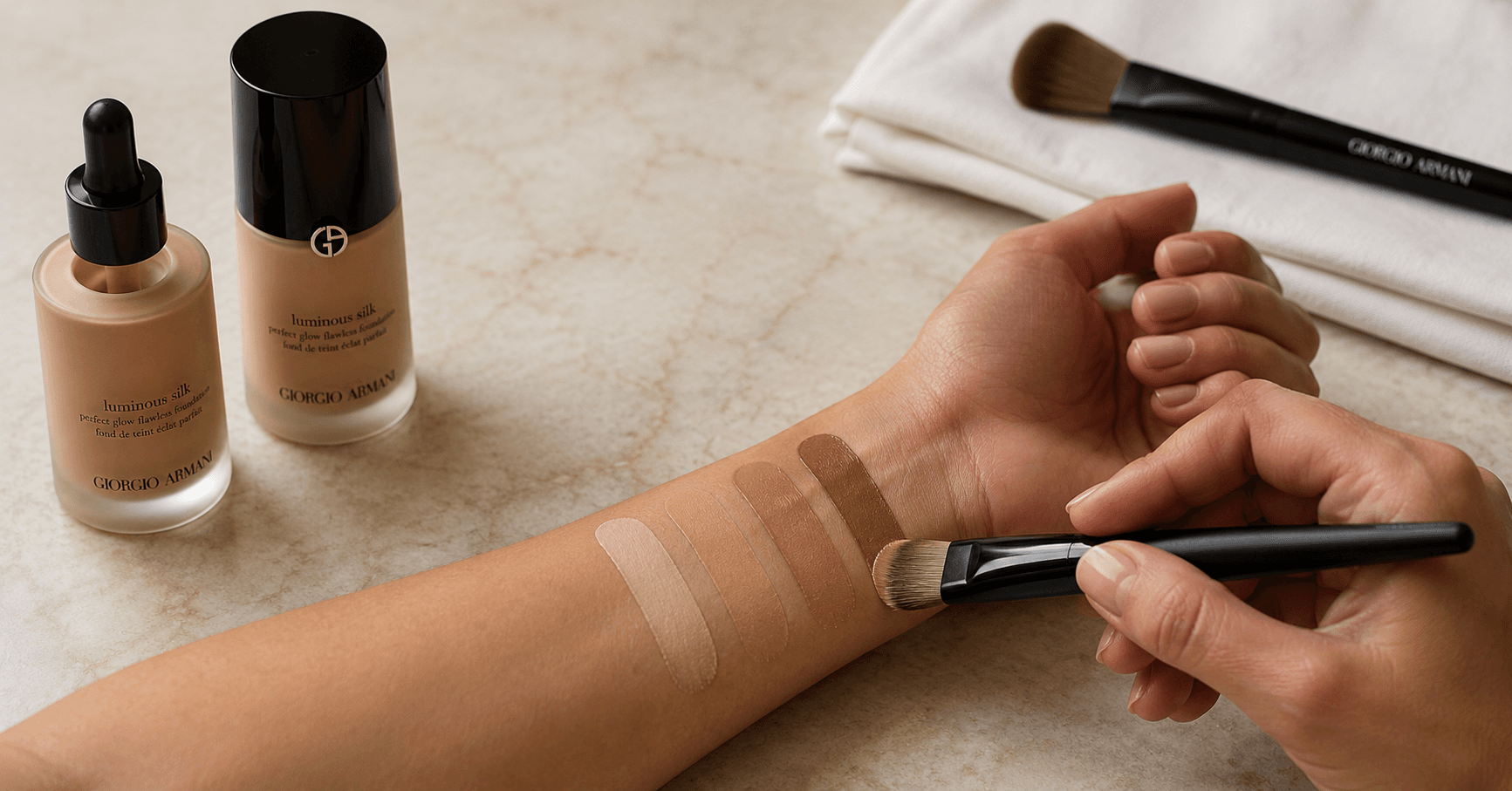
Foundation decides everything
Not all foundations are built for long wear, and not all long-wear products are right for every skin.
Long-wear foundations (water-resistant, transfer-resistant):
- Estée Lauder Double Wear — a classic, full coverage, slightly matte finish
- Dior Forever — more natural, optimised for photography
- Charlotte Tilbury Airbrush Flawless — for larger faces, lightweight layer
- Pat McGrath Skin Fetish Sublime — luxurious coverage, needs skilled application
What doesn't work long-term outdoors:
- Tint formats (BB cream, CC cream) — too light for a hot day
- Thin serum foundations — good for studio shoots, not for a wedding at midday
- "Dewy finish" foundations in summer — melting from skin texture looks different from deliberate glow
Powder, if nothing else
I'm not in favour of heavy powder across the whole face. But there are two places where powder is irreplaceable:
Under the eyes — to set concealer before it "settles" into fine lines
On the T-zone — forehead, nose, and the space between brows, if you tend to get oily
I most often use Laura Mercier Translucent Setting Powder. Banana shade if anti-darkness is needed. No more than two layers.
Setting spray — not for finish, for binding
Many people use setting spray as a "final step" — a quick spray right before leaving. That's a mistake.
Setting spray works best between layers, not only at the end. Personally:
- Foundation
- Quick spray of setting spray
- Concealer
- Powder where needed
- Bronzer, blush, highlights
- Another spray of setting spray
- Eye makeup, lipstick, brows
- Final spray to "lock" everything
Recommendations:
- Urban Decay All Nighter — standard
- Charlotte Tilbury Airbrush Flawless Setting Spray — brighter finish
- MAC Fix+ — light, with a slight glow
What doesn't work: setting sprays with high alcohol content on sensitive skin. Read the ingredient list.
Eyes — where it falls apart first
If makeup is breaking down, eyes are the first signal. Mascara smudges, eyeshadow gathers in the crease, eyeliner lifts.
Three solutions:
-
Eye primer. Urban Decay Primer Potion or NARS Smudge Proof. Wait 30 seconds for it to set. Without it, all your pigments will move.
-
Waterproof mascara, but only if you'll cry (wedding, emotional moments). Otherwise standard mascara with a good lash primer lasts the same.
-
Gel eyeliner instead of liquid. Liquid liners are great for photography, but gel lasts much longer.
Lips — a category of their own
Lips are different — there's no powder that can "lock" them, no setting spray that works over wet surfaces.
For long-wear lipstick:
- Liquid lipsticks — Pat McGrath, Charlotte Tilbury Airbrush, or MAC Powder Kiss Liquid. Wait 60 seconds for full dry.
- Lip liner across the whole lip before lipstick — not just the contour. It creates a "pigment base" that holds the colour.
- Balm after, not before — balm before makes the lipstick move. Balm only if lips dry out after a few hours.
Don't:
- Don't eat greasy food (zero chance on a wedding day)
- Don't drink through a straw if the lipstick matters
- Don't lick your lips all day
- Don't wear a white dress and drink red wine without touching up first
Touch-ups during the day
No matter how well it's built, makeup needs to be "refreshed" once or twice during a long day.
Touch-up in 5 minutes:
- Wipe excess shine on forehead and nose with blotting paper (no rubbing)
- Apply a light layer of powder there
- Add lipstick (or just balm if it's a natural look)
- Quick spray of setting spray from 30 cm away
What NOT to do:
- Don't add foundation over existing — it will "sink" and look layered
- Don't put concealer over concealer
- Don't "fix" with a brush if you aren't experienced
For detailed questions about specific brands, see the frequently asked questions.
For weddings and long days — a special note
For wedding days in Skopje or Gostivar that last 12+ hours (ceremony through after-party):
- At least one trial run "mapping" the rhythm of the day on a notepad (11 AM ceremony to 1 AM after-party = 14 hours)
- Backup kit: liquid lipstick in the same shade, small powder, a few cotton swabs for corrections
- Lip balm, not gloss — gloss attracts debris
- If you have lash extensions — confirm twice that the adhesive holds
Summary without poetry
- Skin prep matters more than makeup
- Powder only where there's oil, not everywhere
- Setting spray between layers, not just at the end
- Eye primer — always
- Liquid lipstick for long-wear
- Touch-ups every 4–6 hours, not more often
- Don't "fix" over existing makeup — blot, don't add
And this is the most important thing: if all this sounds like a lot, it is. That's why makeup artists exist. This is, more or less, the description of what I'm thinking all day when I work.
Frequently asked questions
ABOUT THE AUTHOR
Brand recommendations are my own — I'm not paid by any of them. There are equivalent products from smaller brands that also work.